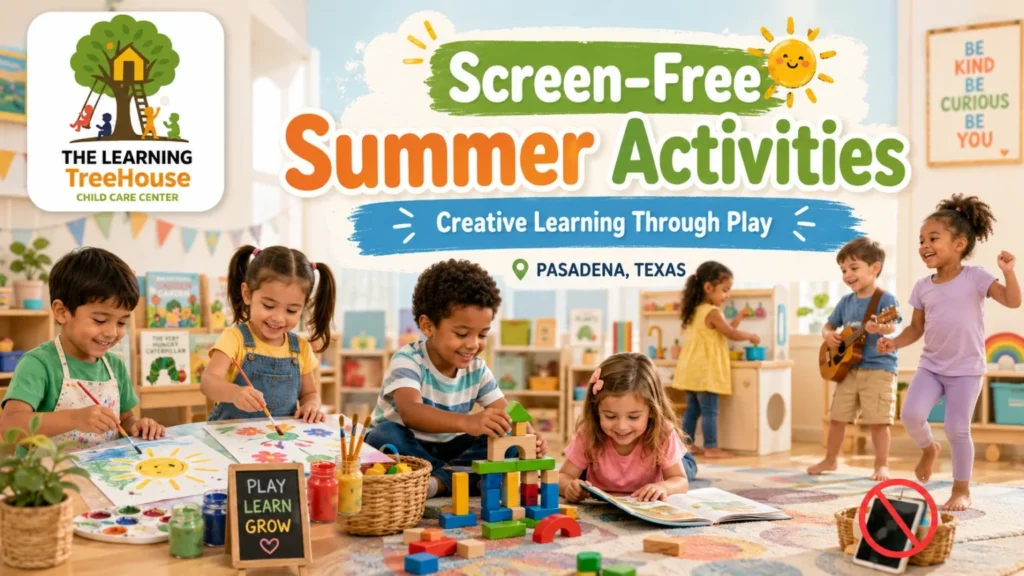
Summer is a special time for children to play, explore, move, create, and enjoy a slower rhythm. But for many parents, summer also brings one common concern: screen time.
With school routines changing and long days at home, it can be easy for children to spend more time on tablets, phones, TV, or video games. While screens may be part of modern life, young children still need hands-on activities that help them build language, creativity, movement, confidence, and social skills.
At The Learning Treehouse in Pasadena, TX, we believe children learn best when they are actively engaged. Screen-free activities give children the chance to use their imagination, move their bodies, ask questions, solve problems, and connect with the world around them.
Families looking for a warm, structured learning environment can also explore our childcare programs in Pasadena, TX.
Why Screen-Free Activities Matter for Children
Young children do not just learn by watching. They learn by touching, building, moving, talking, singing, pretending, listening, and exploring.
Screen-free activities help children develop important early learning skills, including language, communication, fine motor skills, gross motor skills, creativity, imagination, problem-solving, social interaction, emotional expression, patience, and confidence.
When children spend time creating, playing, and interacting with others, they are building the foundation for future learning.
1. Art and Creative Play
Art is one of the best screen-free activities for young children. Coloring, painting, drawing, cutting, gluing, and simple craft projects help children express themselves while developing fine motor skills.
Children can use crayons, washable paint, paper, stickers, child-safe scissors, cotton balls, leaves, paper plates, or recycled materials to create something of their own.
Art also gives children a healthy way to express emotions. Sometimes a child may not have the words to explain how they feel, but they can show ideas, feelings, and stories through colors, shapes, and pictures.
Parent Tip
Keep art simple. Children do not need perfect crafts. They need freedom to explore, create, and feel proud of their work.
2. Storytime and Reading
Reading is a calm and powerful screen-free activity. Storytime helps children build vocabulary, listening skills, imagination, memory, and early literacy.
Parents can make storytime more interactive by asking simple questions:
What do you think will happen next?
How do you think this character feels?
What was your favorite part of the story?
Can you point to something red, big, small, or funny?
Even a few minutes of reading each day can help children build stronger language and attention skills.
Our teaching environment also supports children through stories, songs, movement, guided learning, and age-appropriate activities.
3. Music and Movement
Children love to move, and summer is a great time to turn music into learning. Singing, clapping, dancing, marching, stretching, and simple rhythm games help children develop coordination, listening skills, body awareness, and confidence.
Try simple movement ideas like freeze dance, animal walks, clapping patterns, follow-the-leader, marching to music, nursery rhymes, and simple English-Spanish songs.
Music and movement are especially helpful when children have extra energy or need a fun transition between activities.
4. Building and Pretend Play
Blocks, puzzles, toy animals, pretend kitchens, cars, dolls, dress-up clothes, and cardboard boxes can create hours of screen-free learning.
When children build a tower, pretend to run a store, act out a story, or create a pretend restaurant, they are practicing planning, communication, imagination, and problem-solving.
Pretend play also helps children understand the world around them. They may copy family routines, teacher roles, community helpers, or everyday experiences as they explore ideas through play.
5. Outdoor Play and Fresh Air
Outdoor play gives children space to move, run, climb, jump, balance, and explore. It supports physical development, coordination, social skills, confidence, and emotional balance.
Simple outdoor activities include sidewalk chalk, bubbles, nature walks, supervised water play, ball games, obstacle courses, follow-the-leader, scavenger hunts, and playground time.
In Pasadena, TX, summer weather can be warm, so outdoor play should be planned carefully. Choose cooler parts of the day, offer water breaks, use shaded areas when possible, and watch for signs that children need rest.
At The Learning Treehouse, children enjoy movement and fresh air in our outdoor play area as part of a balanced childcare day.
6. Indoor Play for Hot or Rainy Days
Some summer days are too hot, rainy, or uncomfortable for outdoor play. That does not mean children need screens.
Indoor play can include puzzles, blocks, music, pretend play, drawing, sensory bins, reading, simple movement games, and quiet creative activities. These activities help children stay engaged while remaining comfortable indoors.
Our indoor play area gives children a safe, supervised space to enjoy movement, creativity, and hands-on learning when outdoor play is limited.
7. Sensory Activities
Sensory play helps children learn through touch, sound, sight, smell, and movement. These activities are especially helpful for toddlers and preschoolers because they support curiosity, language, motor skills, and focus.
Screen-free sensory ideas include water bins, rice or pasta scooping, playdough, texture baskets, finger painting, sand play, sorting colors or shapes, and exploring safe nature items like leaves, rocks, or flowers.
Always choose age-appropriate materials and supervise sensory activities closely, especially with younger children.
Parents with younger children can also learn more about our toddler and preschool program, where children build independence, language, movement, and early social skills through guided play.
8. Simple Helping Tasks at Home
Children often love helping adults. Simple household tasks can become meaningful learning activities when they are safe and age appropriate.
Children can help with sorting socks, watering plants, wiping a small table, putting toys away, matching lids, helping set napkins, sorting fruits by color, or carrying light items.
These tasks help children build responsibility, independence, confidence, and everyday problem-solving skills.
9. Quiet Time Without Screens
Not every summer activity needs to be busy. Children also need quiet time to rest, reset, and use their imagination.
Quiet screen-free ideas include looking at picture books, drawing, puzzles, listening to soft music, quiet building toys, storytelling, or resting with a favorite blanket or stuffed toy.
Quiet time helps children practice focus, patience, and emotional regulation.
How The Learning Treehouse Supports Screen-Free Learning
At The Learning Treehouse, children are encouraged to learn through hands-on activities, play-based learning, teacher-guided experiences, indoor play, outdoor play, music, movement, art, stories, and social interaction.
Our programs help children build confidence through real experiences, not just passive watching. Whether children are painting, building, singing, playing outside, listening to stories, or working with friends, they are developing skills that support growth and school readiness.
Families preparing for kindergarten can also explore our Pre-Kindergarten Program.
Final Thoughts
Summer does not have to depend on screens. With simple activities, children can stay active, creative, curious, and connected.
Screen-free play gives children the chance to use their minds, bodies, voices, and imagination. For parents, the goal does not have to be perfection. Even small moments of reading, outdoor play, music, art, or pretend play can make a meaningful difference in a child’s day.
If you are looking for a warm childcare center in Pasadena, TX where children learn through play, creativity, movement, and caring teacher support, The Learning Treehouse would love to meet your family.
Call (713) 485-4004 or schedule a tour today to learn more about our childcare programs.
Screen-Free Summer Activities FAQs
What are good screen-free summer activities for children?
Good screen-free summer activities include art, storytime, music, movement games, building blocks, pretend play, outdoor play, sensory activities, puzzles, nature walks, and simple helping tasks at home.
Why are screen-free activities important for young children?
Screen-free activities help children build language, creativity, motor skills, social skills, problem-solving, confidence, focus, and emotional development through hands-on learning.
How can parents reduce screen time during summer?
Parents can reduce screen time by creating simple routines, offering fun alternatives, planning outdoor play during cooler times, keeping art and books available, and joining children in hands-on activities.
What are good indoor screen-free activities for hot days?
Good indoor activities include reading, music, dancing, puzzles, building blocks, pretend play, art projects, sensory bins, playdough, and quiet creative activities.
What outdoor activities are good for children in summer?
Outdoor activities can include sidewalk chalk, bubbles, ball games, nature walks, scavenger hunts, supervised water play, obstacle courses, and playground time during safe weather conditions.
How does screen-free play support learning?
Screen-free play supports learning by helping children practice communication, imagination, movement, decision-making, sharing, patience, creativity, and problem-solving.
Does The Learning Treehouse use play-based learning?
Yes. The Learning Treehouse supports children through play-based learning, hands-on activities, stories, music, movement, indoor play, outdoor play, and teacher-guided experiences.
How can I learn more about The Learning Treehouse?
Parents can call (713) 485-4004 or schedule a tour to learn more about childcare programs at The Learning Treehouse in Pasadena, TX.