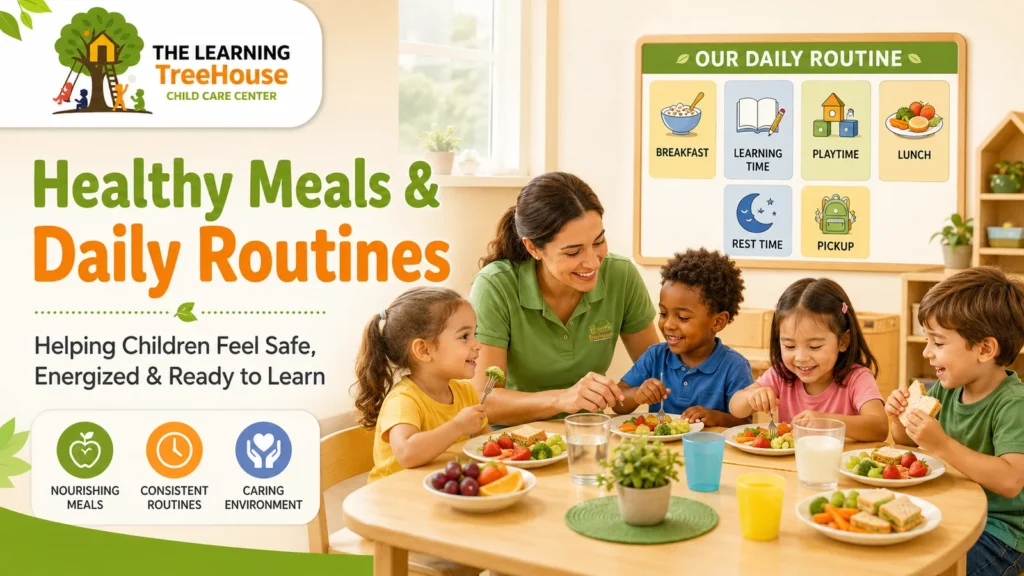
For young children, a good day is built on simple but meaningful moments: feeling safe, eating well, playing, resting, learning, and knowing what comes next.
That is why healthy meals and daily routines matter so much in a childcare center. Children feel more comfortable when their day has a gentle rhythm. They begin to understand when it is time to eat, play, learn, rest, clean up, and get ready to go home.
At The Learning Treehouse in Pasadena, TX, we believe children do best when they feel cared for, nourished, and secure. Our daily routines help children build confidence, independence, emotional balance, and readiness for learning.
Families who want to understand our full care approach can also explore our childcare programs in Pasadena, TX.
Why Routines Help Children Feel Safe
Young children feel more secure when they know what to expect. A predictable routine gives children a sense of comfort because the day does not feel confusing or rushed.
In a childcare setting, routines may include arrival time, morning play, structured learning, meals, indoor play, outdoor play, rest time, storytime, creative activities, snack, and pickup.
These daily patterns help children understand transitions. They learn when it is time to clean up, wash hands, sit for a meal, join a group activity, rest quietly, or get ready to go outside.
A steady routine can help children feel calmer, more independent, and more confident during the day. Our classroom environment is designed to support children with structure, warmth, age-appropriate learning, and caring teacher guidance.
Meals Support Energy, Growth, and Learning
Children need energy to move, think, play, listen, and learn. Healthy meals and snacks help support their bodies and minds throughout the day.
When children are hungry or tired, it can be harder for them to focus, communicate, share, or manage emotions. Nutritious meals help children feel more ready to participate in classroom activities, outdoor play, group time, and creative learning.
Meals also give children a chance to practice important life skills. During mealtime, children may learn patience, table manners, conversation, independence, self-feeding, and how to sit with others in a calm group setting.
Our nutrition and meal area supports children with clean, supervised mealtimes and positive daily routines.
A Calm Meal Area Makes a Difference
The meal environment matters just as much as the food itself. Children should eat in a space that feels clean, calm, safe, and supervised.
A calm meal area helps children slow down, focus on eating, and feel comfortable trying new foods or following mealtime routines. Teachers and caregivers can gently support children who need help with utensils, opening food items, sitting safely, or learning table habits.
Mealtime is also a social experience. Children may talk with friends, listen to teachers, use polite words, wait their turn, and enjoy being part of a group.
When mealtime feels positive, children are more likely to build healthy habits over time.
Routines Help Children Manage Transitions
Transitions can be challenging for young children. Moving from playtime to cleanup, from lunch to rest, or from outdoor play to classroom learning may feel difficult if children are not prepared.
A consistent routine helps children understand what is coming next. Teachers can use simple reminders, songs, visual cues, and gentle guidance to help children move through the day.
For example, a child who knows that lunch comes before rest time may begin to settle more easily. A child who knows outdoor play comes after learning time may feel more patient during group activities.
These small daily patterns build emotional security and reduce stress for children.
Healthy Routines Support Better Behavior
Many behavior challenges happen when children are hungry, tired, overstimulated, or unsure of what is happening next. A balanced routine can help reduce these moments.
When children have regular meals, active play, rest, and calm transitions, they are more likely to feel steady and supported.
Routines also help children practice self-control. They learn to wait, listen, clean up, follow directions, wash hands, sit for meals, and participate in group activities.
These skills are important not only in childcare, but also at home, in preschool, and later in school.
Rest Is Part of a Healthy Routine
A strong childcare routine is not only about meals and learning. Rest is also important.
Young children use a lot of energy throughout the day. They are playing, talking, moving, listening, learning, and interacting with others. Rest time gives children a chance to recharge.
A calm resting area helps children relax, nap, or enjoy quiet time based on their age and needs.
Even children who do not sleep can benefit from quiet time. It gives their bodies and minds a break so they can return to the day feeling more balanced.
Indoor and Outdoor Play Complete the Day
A healthy routine should also include time for movement and play. Children need opportunities to move their bodies, build coordination, use imagination, and interact with friends.
Indoor play gives children a safe space for creativity, sensory activities, music, building, puzzles, pretend play, and hands-on learning. Our indoor play area supports children when the weather is hot, rainy, or not suitable for outdoor play.
Outdoor play gives children space for fresh air, running, climbing, group games, and physical development. Our outdoor play area helps children build confidence, coordination, and social skills through supervised movement.
Together, meals, rest, indoor play, outdoor play, and learning activities create a balanced childcare day.
How Parents Can Support Routines at Home
Children often adjust more easily when home routines and childcare routines support each other.
Parents can help by keeping a few simple habits consistent:
Regular bedtime
Calm morning routine
Nutritious meals and snacks
Reading together
Encouraging cleanup
Talking about the next day
Allowing enough time for rest
Using kind reminders during transitions
The goal is not perfection. Small, steady habits can make a big difference for young children.
When parents and childcare teachers work together, children often feel more secure and confident.
Why Parents Appreciate Structure in Childcare
Parents want to know their child is spending the day in a place that feels safe, caring, and organized. A strong routine helps parents feel reassured because they know their child is being supported throughout the day.
At The Learning Treehouse, children are cared for through daily rhythms that include meals, learning, play, rest, and teacher support. This balance helps children feel safe, energized, and ready to grow.
Parents can also learn more about our safe and clean environment and how our center supports children’s comfort and well-being.
Final Thoughts
Healthy meals and daily routines may seem simple, but they play a big role in early childhood development.
They help children feel safe, nourished, focused, calm, and ready to learn. They also support independence, social skills, emotional confidence, and positive behavior.
For families in Pasadena, TX, The Learning Treehouse provides a warm childcare environment where children are supported through structure, care, meaningful activities, and daily routines that help them grow.
If you would like to learn more about our programs, call (713) 485-4004 or schedule a tour today.
Healthy Meals and Routines FAQs
Why are routines important in a childcare center?
Routines help children feel safe, understand expectations, manage transitions, and move through the day with more confidence.
How do meals help children learn?
Healthy meals give children energy for learning, play, movement, and focus. Mealtime also helps children practice manners, independence, patience, conversation, and social skills.
Why is a calm meal area important for children?
A calm meal area helps children feel comfortable while eating. It also supports safe eating habits, table manners, independence, and positive social interaction.
How do routines help with behavior?
Routines can reduce stress because children know what to expect. When children are fed, rested, and prepared for transitions, they often feel calmer and more secure.
Why is rest time part of a healthy childcare routine?
Rest time helps children recharge, support emotional balance, and return to activities with more energy and focus.
How can parents support routines at home?
Parents can support routines with consistent bedtime, regular meals, calm mornings, reading time, cleanup habits, and simple conversations about the next day.
Do meals and routines support school readiness?
Yes. Meals and routines help children practice independence, listening, patience, self-help skills, focus, and group participation, which are all helpful for school readiness.
How can I learn more about The Learning Treehouse?
Parents can call (713) 485-4004 or schedule a tour to learn more about childcare programs at The Learning Treehouse in Pasadena, TX.